Return to Table of Contents
Improve the Soil Structure
As the structure of a soil is made more granular and crumbly by
decomposing organic matter, the soil absorbs moisture that would otherwise run
off, causing erosion and a loss of nutrients in the process. Good soil structure
provides channels through which water and air can filter to greater depths. When
rain comes after a dry spell, soil that is hard on the surface is much more
subject to rapid runoff and erosion than one that is loose and crumbly.
Organic matter in the soil also ensures a continuous food
source for soil organisms. As the organisms decompose the organic materials,
they help maintain good soil structure, making the soil a more favorable place
for root development. The decomposition process improves the soil structure by
developing compounds that cement small soil particles together into aggregates,
allowing for both increased drainage and moisture retention. Decomposition also
changes the organic matter into inorganic nutrients that can be used by growing
plants.
Incorporating organic matter aids in sustaining the organic
content of the soil. However, organic matter cannot be built up permanently in
the soil because it continually decomposes and disappears; soil building must be
a continual process in the garden.
Return to Table of Contents
Test Your Soil
The first step to improving your soil is to have your soil tested
for pH and nutrient levels. Your local Extension agent can provide you with soil
test forms and instructions. The soil test report will tell you whether your
soil needs lime or nutrients or both. If the soil test recommends lime, apply
it! Work the lime into the soil with a spade or a tiller to a depth of about 6
inches. Lime changes the pH balance of the soil, which is critical to absorption
of nutrients by plants.
Return to Table of Contents
Add Organic Matter
 To improve the soil
structure, or tilth, add organic matter in the form of compost, cover crops, or
yard waste. Yard waste such as shredded leaves, crop residues, straw, and
similar materials should be tilled into the soil in the fall to allow
decomposition through the fall and winter. At the same time, grass clippings,
manure, or fertilizer should be incorporated to provide the extra nitrogen
required to help break down the dry organic materials. This material can be
composted using compost bins or compost barrel and added to the garden in the spring if your prefer.
To improve the soil
structure, or tilth, add organic matter in the form of compost, cover crops, or
yard waste. Yard waste such as shredded leaves, crop residues, straw, and
similar materials should be tilled into the soil in the fall to allow
decomposition through the fall and winter. At the same time, grass clippings,
manure, or fertilizer should be incorporated to provide the extra nitrogen
required to help break down the dry organic materials. This material can be
composted using compost bins or compost barrel and added to the garden in the spring if your prefer.
Return to Table of Contents
Grow Cover Crops and Green Manures
A cover crop, such as rye grass, is a temporary planting, usually
done in the fall, that protects the soil from wind and water erosion and adds
organic matter. Crops grown for soil improvement are called green manure crops
and are left in place for six months to a year. Legumes are especially efficient
because they "fix" nitrogen from the air into the soil.
After the summer garden crops have been harvested, and stalks
and vines removed, lightly till the garden to prepare a seed bed, incorporating
lime and fertilizer, if necessary. Broadcast the cover crop seed, rake lightly
to cover it, and then irrigate. Where you have fall crops growing, you can sow
cover crop seed between rows a month or less before expected harvest, but not
later than November 1.
If you plant a hardy species that survives the winter, it will
resume growth as the weather begins to warm, but be careful not to let the crop
go to seed. Cover crops and green manures are usually tilled under in the spring
before planting. If the crop is tall or thick, cut it with a lawn mower prior to
tilling - especially legumes as they may clog machinery. For large gardens, a
rototiller is the most practical way to incorporate any type of crop. The crop
should be turned under two to three weeks before planting new seed.
Return to Table of Contents
Add Nutrients
If your sod test recommends additional nutrients, add them just
before planting your main crops. By regularly adding organic matter to the soil,
there is less need for chemical fertilizers, since organic matter promotes a
gradual release of plant nutrients. Organic matter alone, however, will not
provide sufficient nutrients for plants. Animal manures or other fertilizers
should also be incorporated into garden soil.
Cover Crops
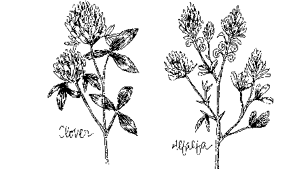 Roots improve the tilth (soil structure)
more than tops of plants when they are incorporated. Different crops vary in the
depth of their roots. Fine grasses and clover roots work on the upper 6 to 12
inches; alfalfa and sweet clover have taproots which extend deeper. When they
die and rot, the roots leave channels for water and air movement in the soil.
Roots improve the tilth (soil structure)
more than tops of plants when they are incorporated. Different crops vary in the
depth of their roots. Fine grasses and clover roots work on the upper 6 to 12
inches; alfalfa and sweet clover have taproots which extend deeper. When they
die and rot, the roots leave channels for water and air movement in the soil.
Return to Table of Contents
Correct Severe Situations
Many extreme soil conditions can be corrected through the
addition of organic matter or the use of some creative solutions.
If your soil is very rocky, consider using large rock
formations as landscape features and plant a rock garden. You can also improve
the soil in the least rocky pockets and then plant. Rocks can be raked out by
hand or you can use a tractor for large areas. Be sure to incorporate lots of
organic matter.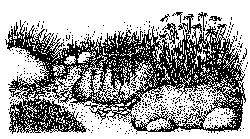
For soil that is primarily clay or sand, or that has a hard
surface crust (water runs off), or is compacted, incorporate 2 to 3 inches of
organic matter in the top few inches of soil and mulch liberally for several
years. Also, plant cover crops each year until the soil is improved.
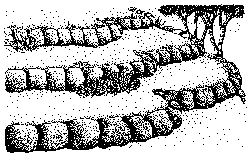
Raised beds or terraces are good solutions for improving
extremely poor or shallow (bedrock close to surface or topsoil removed during
construction) soil or soil with poor drainage.
 The
site can also be graded, then covered with an 8 to 12 inch layer of topsoil -
but guard against erosion. Poor drainage can also be helped by installing
drainage tile.
The
site can also be graded, then covered with an 8 to 12 inch layer of topsoil -
but guard against erosion. Poor drainage can also be helped by installing
drainage tile.
Return to Table of Contents
 Gardeners' Corner
Kids'
Garden
Sustainable Garden
Contact Us
Gardeners' Corner
Kids'
Garden
Sustainable Garden
Contact Us
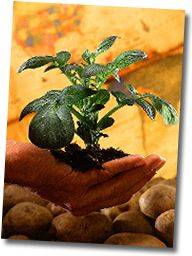


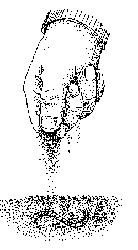 be as important to home gardeners as it is to farmers. Improving the soil
structure is one of the most important aspects of soil care, and adding organic
matter is the most effective way to accomplish this. Organic matter also helps
maintain the pH balance of the soil and adds nutrients.
be as important to home gardeners as it is to farmers. Improving the soil
structure is one of the most important aspects of soil care, and adding organic
matter is the most effective way to accomplish this. Organic matter also helps
maintain the pH balance of the soil and adds nutrients. 